Types of Data Protection Explained: Encryption, Masking, Redaction, Deletion, and Moving

Data drives modern businesses. While it delivers immense value, it also presents risk, and organizations must safeguard sensitive and regulated data. To meet compliance mandates while preserving data utility, organizations rely on multiple types of data protection techniques, including encrypting, masking, redacting, deleting, or moving data.

Each aligns with different risk and operational requirements. In large, complex environments, challenges arise when centralized policies don’t govern these actions. As a result, inconsistent remediation and security gaps are common.
Let's explore various remediation options, when to use each approach, and what to look for in a data protection solution so you can enforce security uniformly and at scale.
What Is Data Protection?
Data protection describes practices organizations use to safeguard sensitive information. It encompasses data security, access, and availability.
Many businesses have a defined data protection program, built around:
Compliance Regulations
Cybersecurity Best Practices
Data Retention Policies
How Long? What Data? Move or Delete?
Safe Data Use Controls
Data protection evolves constantly. Regulatory changes, emerging threats, and the rapid advancement of AI all introduce new risks and requirements. As organizations adapt, they need a comprehensive platform capable of managing data protection across all environments and data types.

Types of Data Protection
Depending on data type, regulatory requirements, and data use, some protection methods are more effective than others. Below is an in-depth guide on each type, explaining how it works and how it supports compliance.


Encryption: Protect at Rest and in Transit Without Disruption
Modern data encryption streamlines and automates protection. Certificate-free and policy-based encryption enables seamless access for authorized users and applications. You don't have to choose between compliance and usability. Both are possible with the right platform.
Masking: Minimize Exposure Risk While Preserving Utility
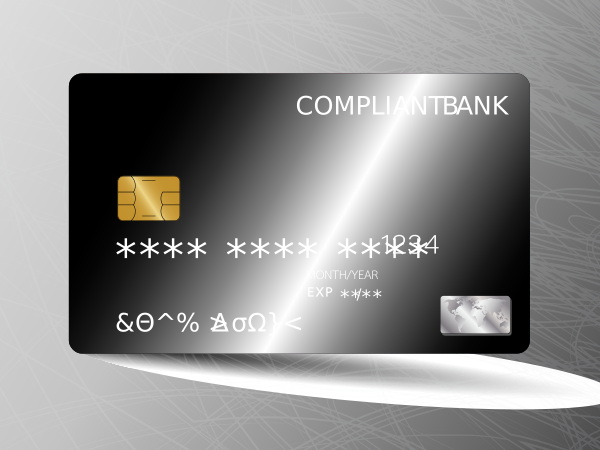
Data masking allows you to create a sanitized version of sensitive data to avoid unintended or unauthorized access. Balancing data value and risk is a common struggle, but masking prevents exposure while maintaining data utility.
Redaction: Reduce Data Exposure and Compliance Risk
Data redaction keeps sensitive data secure yet usable by the organization. It empowers teams to collaborate and share data internally and externally without the risk of exposing PII or confidential information. It also renders data of no value to a hacker should a data breach occur.
Deletion: Optimize Your Retention Strategy
Deletion is another essential form of data protection. By discovering and removing outdated data, organizations reduce exposure and minimize risk. Policy-driven deletion identifies sensitive information that qualifies as redundant, obsolete, or trivial (ROT). It then removes it before it becomes a liability.
Moving: Ensure Protected Information Is Secure
The final type of data protection is the relocation of sensitive elements. Organizations may generate data in one environment but need to move it to meet compliance and privacy standards.
Types of Data Protection: PK Protect Has You Covered
PK Protect delivers a data-centric security platform that combines discovery and remediation. You can select the protection option that fits your requirements and customize prebuilt policies as needed.
Secure information and ensure compliance without impacting productivity. Uncovering, classifying, and protecting your data more effectively starts with PK Protect. Request a custom demo of the platform today.

Data drives modern businesses. While it delivers immense value, it also presents risk, and organizations must safeguard sensitive and regulated data. To meet compliance mandates while preserving data utility, organizations rely on multiple types of data protection techniques, including encrypting, masking, redacting, deleting, or moving data.

Each aligns with different risk and operational requirements. In large, complex environments, challenges arise when centralized policies don’t govern these actions. As a result, inconsistent remediation and security gaps are common.
Let's explore various remediation options, when to use each approach, and what to look for in a data protection solution so you can enforce security uniformly and at scale.
What Is Data Protection?
Data protection describes practices organizations use to safeguard sensitive information. It encompasses data security, access, and availability.
Many businesses have a defined data protection program, built around:
Compliance Regulations
Cybersecurity Best Practices
Data Retention Policies
How Long? What Data? Move or Delete?
Safe Data Use Controls
Data protection evolves constantly. Regulatory changes, emerging threats, and the rapid advancement of AI all introduce new risks and requirements. As organizations adapt, they need a comprehensive platform capable of managing data protection across all environments and data types.

Types of Data Protection
Depending on data type, regulatory requirements, and data use, some protection methods are more effective than others. Below is an in-depth guide on each type, explaining how it works and how it supports compliance.


Encryption: Protect at Rest and in Transit Without Disruption
Modern data encryption streamlines and automates protection. Certificate-free and policy-based encryption enables seamless access for authorized users and applications. You don't have to choose between compliance and usability. Both are possible with the right platform.
Masking: Minimize Exposure Risk While Preserving Utility
Data masking allows you to create a sanitized version of sensitive data to avoid unintended or unauthorized access. Balancing data value and risk is a common struggle, but masking prevents exposure while maintaining data utility.
Redaction: Reduce Data Exposure and Compliance Risk
Data redaction keeps sensitive data secure yet usable by the organization. It empowers teams to collaborate and share data internally and externally without the risk of exposing PII or confidential information. It also renders data of no value to a hacker should a data breach occur.
Deletion: Optimize Your Retention Strategy
Deletion is another essential form of data protection. By discovering and removing outdated data, organizations reduce exposure and minimize risk. Policy-driven deletion identifies sensitive information that qualifies as redundant, obsolete, or trivial (ROT). It then removes it before it becomes a liability.
Moving: Ensure Protected Information Is Secure
The final type of data protection is the relocation of sensitive elements. Organizations may generate data in one environment but need to move it to meet compliance and privacy standards.
Types of Data Protection: PK Protect Has You Covered
PK Protect delivers a data-centric security platform that combines discovery and remediation. You can select the protection option that fits your requirements and customize prebuilt policies as needed.
Secure information and ensure compliance without impacting productivity. Uncovering, classifying, and protecting your data more effectively starts with PK Protect. Request a custom demo of the platform today.